The European Parliament joined the international Red Week initiative on Wednesday, November 18, with a conference in Brussels highlighting the persecution of Christians and the need for greater protection of religious freedom worldwide.
The event, entitled What if your life depended on your faith?, was hosted by the European Parliament’s Intergroup on Freedom of Religion, Belief and Conscience.
The conference brought together 117 participants, including ten Members of the European Parliament from six countries and two political groups.
According to Aid to the Church in Need (ACN), 413 million Christians live in countries where religious freedom is seriously violated, including around 220 million who are directly exposed to persecution.
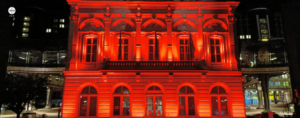
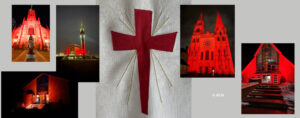
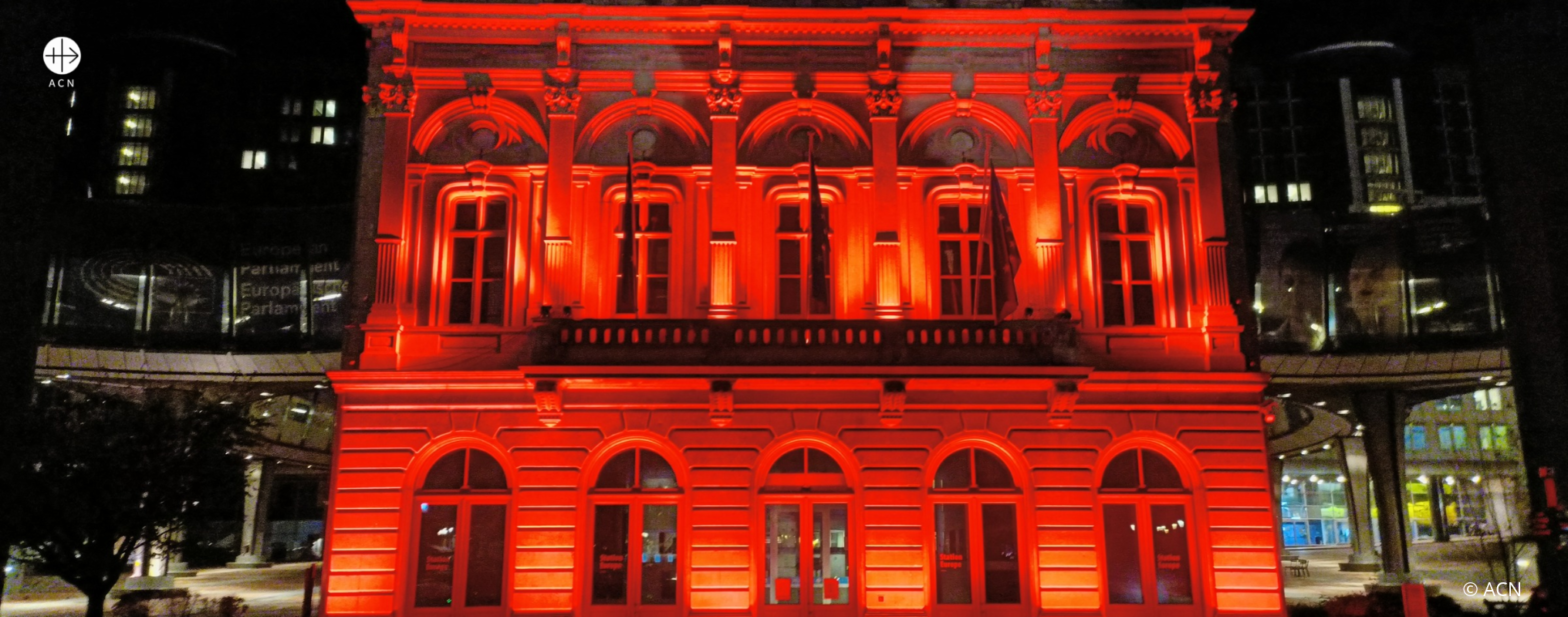
The European Parliament is also taking part in Red Week through the symbolic illumination of its buildings. Following last year’s illumination in Brussels, its premises in Strasbourg are scheduled to turn red on Monday, November 23, joining more than a thousand churches and public buildings worldwide in drawing attention to persecuted Christians and religious freedom.
Christians in Pakistan: rights guaranteed on paper, persecution in daily life
Introducing the testimony from Pakistan, Marcela Szymanski, ACN’s Head of International Advocacy, urged parliamentarians to listen to the experiences of persecuted Christians and turn their concern into action.
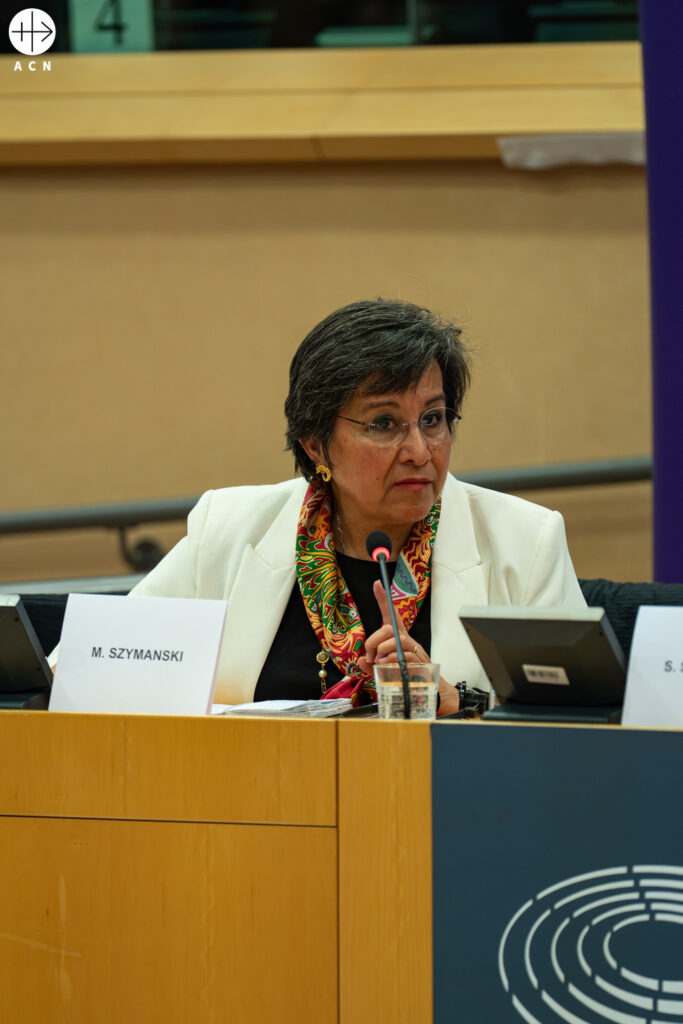
“Let’s open our hearts and minds to what they have to say,” she said, encouraging participants to use their responsibilities to promote change.
The testimony highlighted the challenges facing Pakistan’s Christian minority, including the misuse of blasphemy laws, mob violence, and the abduction and forced conversion of Christian girls.
Although Pakistan’s constitution guarantees freedom of religion, Christians continue to face serious threats. In 2025, 362 people were accused of blasphemy, compared with 344 the previous year.
Among the cases presented was that of Kamran Masih, a Christian who ran a village dispensary in Punjab. In October 2026, he was accused of sharing blasphemous content on social media. Following his arrest, a mob set fire to his clinic, forcing his family to flee. A month earlier, another doctor had lost his clinic and home under similar circumstances.
The testimony also highlighted the abduction, forced conversion, and forced marriage of Christian girls. In January 2026, a 16-year-old girl from Lahore was abducted on her way to church and subsequently forced to convert and marry. In 2025, 23 Christian women and girls were among 94 reported victims from religious minorities of such abuses.
Despite these difficulties, initiatives such as local peace committees bringing together bishops, police, and community leaders, as well as the work of Catholic schools, offer examples of cooperation and peaceful coexistence.
The conference also heard a testimony from Nigeria, presented by Open Doors, highlighting the violence and forced displacement affecting Christian communities in the country.