The number of kidnappings also dropped slightly compared to 2024 but remains a major problem in parts of Africa.
Fewer priests were arrested or kidnapped in 2025 compared to 2024, but the numbers remain worrying in many parts of the world according to data collected by the international organization Aid to the Church in Need (ACN).

A total of 28 priests and religious were under arrest or otherwise deprived of freedom around the world, compared to 72 the year before. For the purposes of this analysis, only arrests that can be considered motivated by persecution are counted. Priests who are arrested on credible grounds for common crimes are not listed.
The big difference in figures can be attributed to Nicaragua. Whereas in 2024 a total of 44 clergy were under arrest at some point during the year, most were released, and in 2025 there were only two held under arrest. One is Fr. Frutos Valle Salmerón, who was placed under house arrest in July 2024 and remains deprived of freedom, and the other, Fr. Pedro Abelardo Méndez Pérez, who was arrested in June and released in early July.
Belarus also saw a slight decrease in arrests of Catholic priests. In 2025, three priests were arrested but by the end of the year, two had been released. The one who remains in prison is a Polish priest who was accused of espionage. Another priest, who had been sentenced to 11 years in prison in 2023, was also released in 2025, after being pardoned by the president of Belarus.
China, on the other hand, saw an increase in cases of clergy and religious under some form of arrest, with a wave of five incarcerations in the Diocese of Wenzhou between March and June of 2025, including one priest, two religious sisters, and Bishop Peter Shao Zhumin, who has been arrested several times over the years and was placed under house arrest again in March 2025.
Reliable information about the situation of the Catholic Church in China can be difficult to obtain, but according to ACN figures, there were 14 priests and religious under some form of detention during the year 2025, although one, Bishop Julius Jia Zhiguo, died of natural causes on October 30 and another, Bishop Augustine Cui Tai, appears to have been released after the Vatican suppressed his diocese and merged it with another to create a new diocese, with Chinese authorities recognizing him as emeritus. Three other bishops currently believed to be deprived of freedom are Vincent Guo Xijing of Mindong, Joseph Zhang Weizhu of Xinxiang, and James Su Zhimin of Baoding, although it is uncertain that the latter is still alive, as he would be 93 years old in 2025.
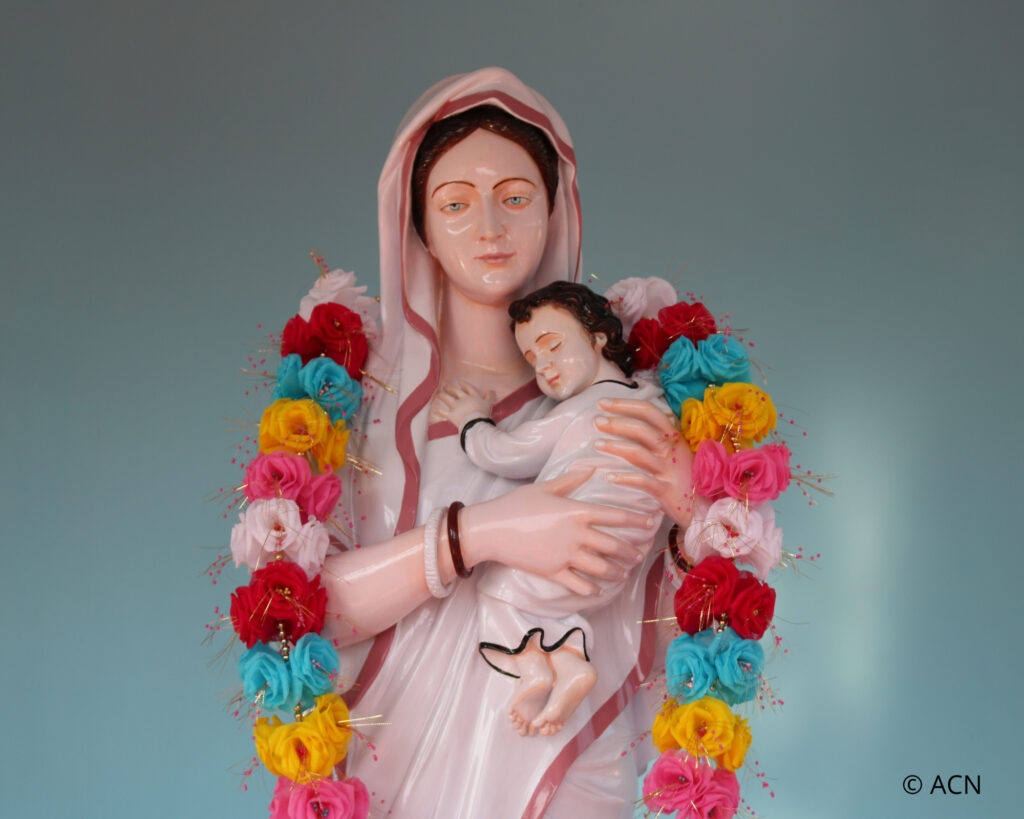
Another country of concern in terms of arrests of Catholic religious in 2025 was India, which has seen a rise in anti-Christian persecution over the past years. Interestingly, the four arrests in the country were all religious sisters, on baseless charges of kidnapping or human trafficking, often following harassment by mobs of radical Hindu nationalists. All were subsequently released.
Venezuela saw two arrests of Catholic clergy in 2025. One, Father Gregory Schaffer is a priest from the United States, who had been working in the country for two decades, and was released following an intervention from the nunciature, while the other, who was arrested in December, was none other than Cardinal Baltazar Porras, the former archbishop of Caracas. Porras was attempting to leave the country when authorities at the airport held him for several hours, threatened him, cancelled his Venezuelan passport and refused to let him use his diplomatic Vatican passport, before releasing him again in the baggage claim area of the airport.
Uganda had one case where a priest was arrested in Masaka in early December by members of the armed forces, accused of “violent subversive activities,” with the priest remaining in jail. Finally, in a very different situation, Fr. Jorg Ält, a Jesuit priest, preferred to serve a 25-day prison sentence than pay a fine for participating in an illegal protest against climate change in Germany.
Slight drop in kidnappings
Although kidnappings of Catholic clergy and religious did decrease from 44 in 2024 to 38 in 2025, the figures continue to be worrying and show the danger of serving the Church in many parts of the world.
Nigeria, the country with most kidnapped priests in the past several years, actually saw an increase in the total number, from 17 to 24. In both cases, the figures include three priests kidnapped several years ago and who remain missing but have not been pronounced dead.
If only the kidnappings within a given year are counted, the numbers are 14 for 2024 and 21 for 2025. Two of these victims of kidnapping in 2025 were religious sisters, both eventually released, and four were seminarians, two of whom were released and two were killed.
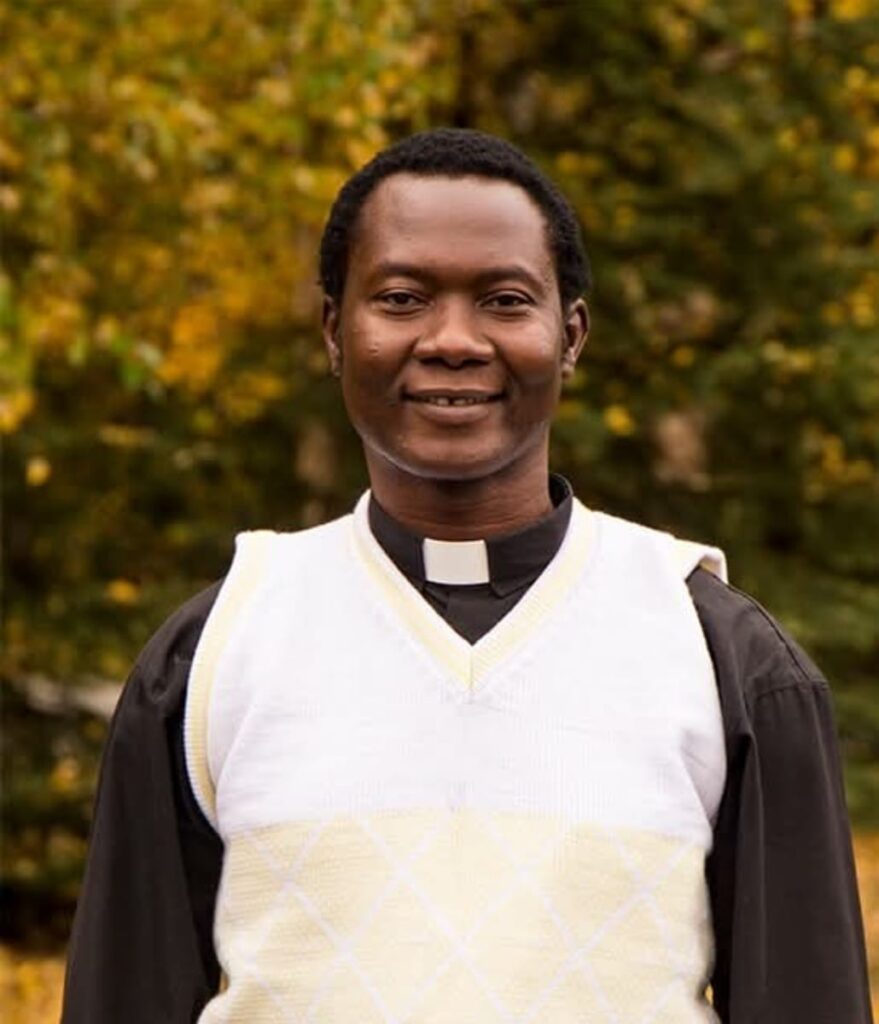
Of the 15 priests kidnapped in 2025 in Nigeria, one was murdered by his abductors and two, Emmanuel Ezema and Bobbo Paschal, were still missing as of the end of 2025, though Fr. Paschal was released in January 2026. All the other priests were released.
Another country which registered a sharp increase in the number of abductions was Cameroon, with a total of eight in 2025 — up from three in 2024. Most of them were conducted by Ambazonia independence militias in the Archdiocese of Bamenda. Fr. Huub Welters, a Dutch missionary, was kidnapped in April and held for three days before being released. Six more priests, all Cameroonian, were all kidnapped in related incidents. On November 15, Fr. John Tatah was kidnapped along with a colleague. Three days later, a group of four other priests went to negotiate Fr. John’s release but were all kidnapped instead. These priests and Fr. John’s companion were all released on November 20, with Fr. John himself regaining his freedom on December 2.
The other Cameroonian priest, Fr. Valentin Mbaïbarem was forcibly taken in the Archdiocese of Garoua in May and held for a week before being safely returned to freedom. Garoua is located in Cameroon’s North Region, close to the Far North Region, which faces a high risk of violent crime and attacks by Boko Haram and Islamic State West Africa (ISWA).
In Colombia, two priests were abducted in 2025. In the first case, Augustinian Fr. Carlos Saúl James was kidnapped and held for 10 days by unknown assailants before being released, and in December, Fr. Winston Chávez was held at gunpoint for several hours by a rebel paramilitary group that took over his city and was forced to read out messages over the church’s speaker system. He was released when the rebels withdrew.
The drop in the total number of kidnappings in comparison to 2024 is due in large part to Haiti, where only one priest, Fr. Jean Julien Ladouceur, was kidnapped in 2025, and later released. In 2024, the number of kidnappings had been 18.
A priest was also abducted in Italy, in June, in the context of a robbery. After being lured into his attacker’s home, on the pretext of a blessing, he was assaulted, robbed, forced into a car, driven to another location and then abandoned in the countryside. ACN also has information that Fr. Habtewelde Teshome from Ethiopia was kidnapped and murdered by armed rebels in March.
Of all the religious kidnapped in 2025, only Fr. Emmanuel Ezema from Nigeria is still missing, since Fr. Bobbo Paschal was released in January 2026.
19 murdered
The number of religious murdered in 2025 increased in relation to previous years. Whereas 13 were killed in 2024, the total in 2025 was 19. Of these, 15 were priests, two were seminarians, and two were religious sisters.
The aforementioned priests and seminarians killed in Nigeria and Ethiopia following kidnappings, four in total, are included amongst those killed due to outright persecution or while carrying out their ministry in dangerous conditions.
In other cases, Nigerian priest Fr. Mathew Eyea was shot when kidnappers opened fire on his car. He was killed instantly, and other passengers were abducted. Fr. Luka Jomo was killed in the context of the civil war, in Sudan, after remaining in the besieged city of El Obeid to care for his parishioners.
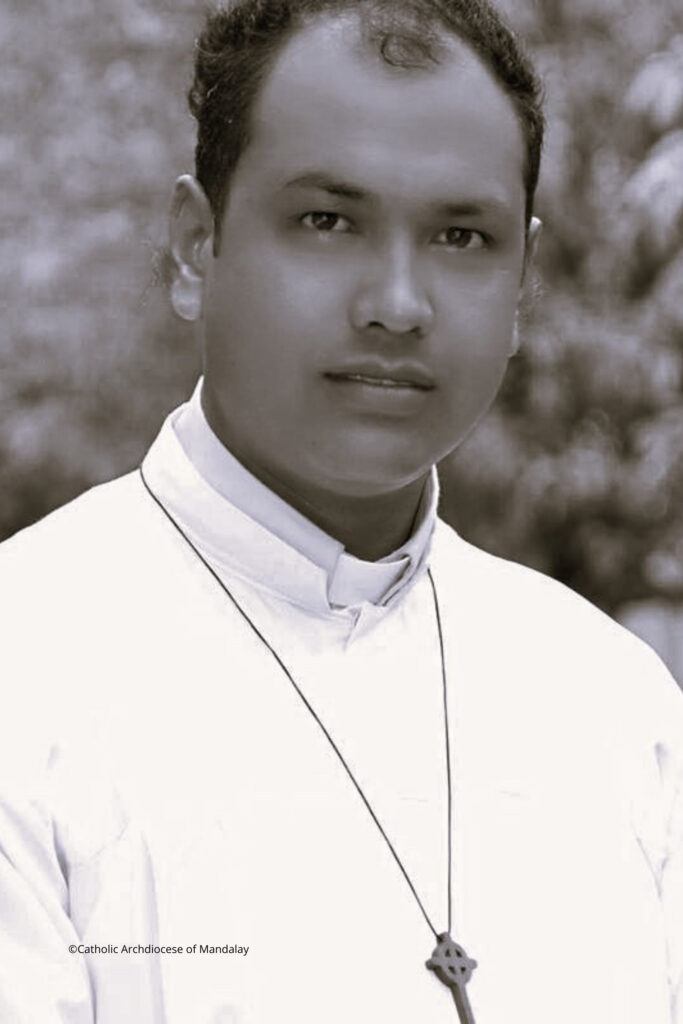
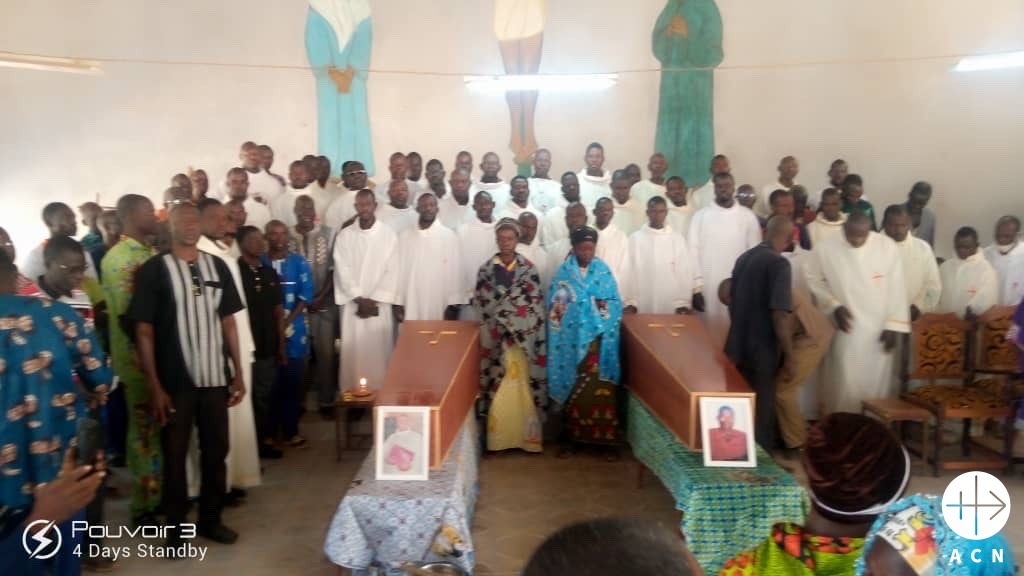
Fr. Donald Martin Ye Naing Win (photo) was killed by armed militants in Myanmar, another country where the Church continues to serve in conflict zones. Witnesses say that when rebels told him to get on his knees, he refused, saying he only knelt before God, and they then executed him.
In the USA, Indian-born Fr. Arul Carasala was shot dead by a man who police said targeted him specifically, though motives remain unclear, and in Mexico, Jesuit Fr. Bertoldo Pantaleón Estrada was murdered in a region that is rife with drug cartel criminality.
Finally, two religious sisters were also murdered in 2025, both of them in Haiti. Sisters Evanette Onezaire and Jeanne Voltaire were both killed by armed gangs during an attack in the city of Mirebalais.
Six of the killings appeared to be unrelated to religious persecution, including Fr. Pierre Panon from France, who was out walking with a friend when the pair was attacked by a mentally unstable man who killed them both; Fr. Grzegorz Dymek in Poland, who was murdered in his rectory during an attempted robbery; Fr. Godfrey Oparaekwe from Nigeria, who was shot while trying to mediate a dispute between a couple; Fr. Augustine Amadu, who was stabbed during a robbery in Sierra Leone; Fr. Richard Gross, an American Jesuit, who was killed during a break-in while on holiday in Spain.
In other cases, the motives for the killings are still shrouded in mystery, but persecution cannot be ruled out. For example, in Kenya, two priests were murdered over the course of a week. Fr. John Maina Ndegwa was kidnapped, beaten, and died in hospital from his wounds. Just days later, Fr. Allois Cheruiyot Bett was shot dead by criminals when he was returning from celebrating a Mass in a distant community. In both cases, the priests appear to have been specifically targeted.
It should be noted that many other pastoral agents suffered and lost their lives in 2025 in different parts of the world. These include catechists and lay missionaries who are often on the front lines, serving Catholic communities in places like Burkina Faso, Nigeria, Mozambique, and Haiti. However, ACN’s list only includes clergy and professed religious.